
Heather Campbell, associate editor of Play, brought up an excellent point concerning the difficulty of today's videos, or, rather, lack thereof:
Developers just dial down the difficulty, and we breeze through a game we're not particularly good at playing....I miss the old-school challenges, as represented by games like Megaman 9. Though I may not like a game as much if I can't get deep into it, a difficult game allows me to feel better about myself after I master a particularly tough section. Reward used to come in the form of personal pride, not Trophies and Achievements. Taking on a game was its own reward.
This is something I've been thinking about for a while. It feels as if the gaming community is getting the shaft these days in that respect. Go back and play some of those games you used to as a kid. Go on. Try it. I'll wait... Continue...
Get raped?
Atrophied skills after the coddling of today's games will have that effect on you. To clarify, it's not that today's games are better or worse than yesterday's games nor is every game easy. There's some challenging stuff out there. You won't see me decrying the state of gaming or that it's become a dumbed down culture (though I'm certain you could argue aspects of both).
Instant gratification is the victor of the day. Somehow along the way, after the great boom in gaming at the turn of the century, slithered the idea, as Campbell recognizes, "if a game is too difficult, it's not going to sell well." Why?
If I want to breeze through something with no challenge or difficulty whatsoever, then I'll just was a goddamn movie or anime. I don't need my ego stroked by "achievements" I didn't really earn, I've got MySpace, Twitter, and Facebook.
Developers need to understand that there's more to difficulty than adding ten more assholes between you and your goal. Fine the line between nuisance and challenge may be, but that sort of laziness sure belongs on the side boldly labeled: nuisance.
I feel this played a huge part in both the critical and commercial success of 2008's Megaman 9. Word of mouth concerning how brutal the game was piqued the interest of many gamers (I can't find a concrete, reliable source for sales numbers at the moment aside from that they were very high) all around the age bracket and its aesthetics brought in a number of hardcore and retro gamers.
Even though the game featured Trophies and Achievements, Megaman 9 was the first I've played in a very long time where I felt they were well earned, and the clearing of a level was a badge of honor rather than a point up on a gamer score. This game broke platform gaming down to its core: shoot and jump (let's add "pray to the gods" for good measure). From there, the unbalanced men and women who gave us this gem sent us through grueling hours serving as a wake-up call to many players.
To advance in this game you have to face two very sobering facts: a) you are not as good a gamer as you thought and b) you are going to die...a lot.
Those with too much pride in their self-attributed skill will likely scoff at the notion, but games like these separate the men from the boys and the women from the girls. Beating levels in Megaman 9 aren't simply feats of skill, but acts of sheer will.
Bryant and I traded a flurry of texts to one another, updating our progress any moment we advanced even slightly forward. And I thought to myself, "Why can't I have more experiences like this?"
Skullfuckingly difficult as the game may be, I felt invigorated playing that game. Suddenly, I was the age of ten again, dancing wildly at my victories and restraining myself from throwing the controller at my screen at my very many failures. I finally felt like I was playing a goddamn game.
Creating challenges that require a bit more skill than that of an infant doesn't seem like too much to ask. And I have to wonder if that's why everyone's obsessed with certain games' multiplayer capabilities. If the game itself won't offer us the proper challenge, we can only hope our fellow gamers will. The Halo 3 campaign was downright insulting and I went from being a "meh" casual fan of the series to a pure, unadulterated hatred for the game and its bro-gamer cult.
Competitive gaming is fun, but I don't want to have to rely on rolling the dice on others' skill every time I want to play a game, especially for those I'd rather just play by my lonesome to begin with.
The misconception that all gamers are some sort of hand-eye coordinating savants is far outdated and the idea conditioned ourselves with games for so long that we've become used to handling difficult games is borderline retarded.
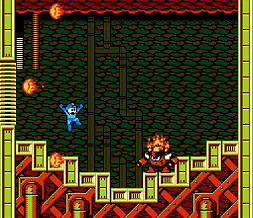
Not all gamers are The Fucking Wizard. At best, I would consider myself a decent gamer, but one in love with gaming and its culture. So when someone like me is dancing through Devil May Cry 4 with little to-no-challenge in two sittings, something's amiss. Megaman 9 was the slap in the face I desperately needed and once again made me long for passionate, innovative developing.
The hardest game conceivable isn't necessary, but something that will exorcise my skills or lack thereof would be nice.
I select "Normal" for a reason, a difficulty selected to serve as a challenge for competent players. If I want someone to hold my hand, I'll select that shy little "Easy" fellow over there.
So..how good are you?
Stories welcome.


 Posts
Posts

